Legal tender is one of the most misunderstood phrases in everyday money. This article explains what it actually means in the UK, which coins and notes qualify in each nation, and why the label rarely decides whether a shop will take your payment.
What does legal tender actually mean?
According to the Bank of England, legal tender has a narrow technical meaning that rarely comes up in daily life. The concept is mainly about settling debts. If a person owes money and offers the exact amount in legal tender, and no contract specifies another way of paying, the creditor cannot successfully sue them for non-payment.
That is a long way from the popular belief that legal tender is a right to spend. It describes how a debt can be discharged, not what a retailer must take across the counter. A coin or note can be perfectly valid legal tender and still be refused at a till, because the two ideas answer different questions.
Does a shop have to accept legal tender?
No. The Bank of England states plainly that a shop owner can choose what to accept. A business can decline a large note, ask for card only, or take cash only. Where the goods or services are paid for at the point of sale, the seller sets the terms before the sale is agreed.
This is why a cashier can legitimately turn down a £50 note for a small purchase, and why many cafés and car parks now take only contactless payments. Neither practice breaks any rule about legal tender. The practical question for shoppers is therefore less “is this legal tender?” and more “what does this business accept?”. Households that rely on cash may find it useful to check before ordering or travelling, and our guide to how households manage cash looks at the wider habits involved.
Which coins and notes count in each nation?
Legal tender differs across the UK. According to the Bank of England:
| Nation | Legal tender |
|---|---|
| England and Wales | Royal Mint coins and Bank of England notes |
| Scotland | Royal Mint coins only |
| Northern Ireland | Royal Mint coins only |
The Bank says English banknotes are not legal tender in Scotland, and that Scottish notes are not legal tender in England or Scotland. Notes issued by Scottish and Northern Irish banks are widely accepted, and they are real money, but their acceptance rests on convention and the choice of the business, not on legal tender status.
Debit cards, cheques and contactless payments are not legal tender anywhere in the UK. Most everyday spending nonetheless happens through them, which shows how little the definition governs normal behaviour.
How do the coin limits work?
Coins have a further twist: some are legal tender only up to a certain amount. The Bank of England sets out these limits:
| Coin | Legal tender up to |
|---|---|
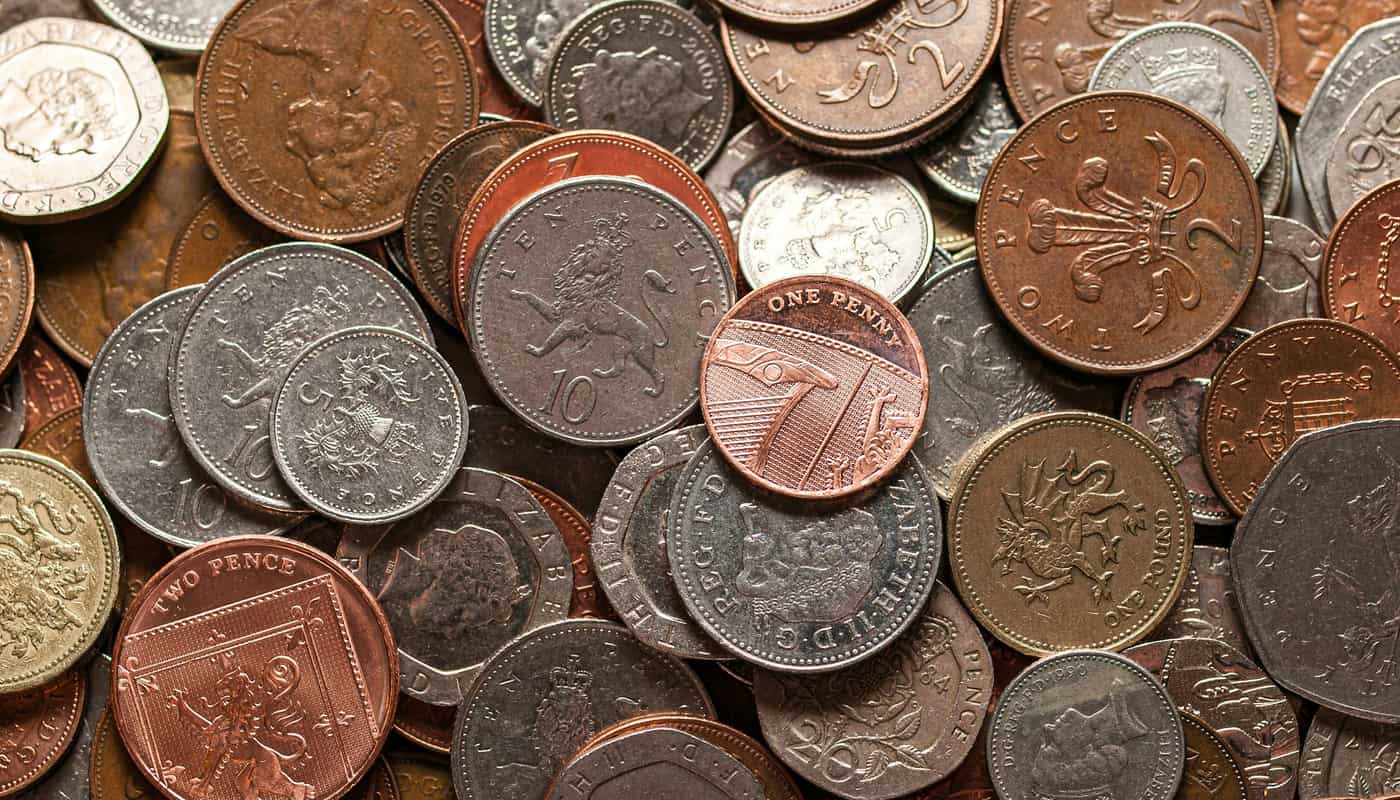
| 1p and 2p | 20p |
| 5p and 10p | £5 |
| £1 and £2 | Any amount |
The limits exist so that nobody can be forced to accept a bag of small change in settlement of a large bill.
A worked example
Suppose a bill of £4.80 is paid entirely in 5p coins. That needs 96 coins (£4.80 divided by 5p). Because 5p coins count as legal tender up to £5, the full amount is within the limit. Now suppose a £5.40 bill is paid in 5p coins alone. That is 108 coins, but the total exceeds £5, so the creditor is not obliged to take them all as legal tender for the whole sum.
For copper coins the ceiling is much lower. A 21p amount paid only in 1p coins would be 21 coins, one above the 20p limit, so 1p coins would not be legal tender for the whole of it. This is illustrative arithmetic, but the principle is the same in any real case: the limit applies to the total being paid in that coin.
When do banknotes stop being legal tender?
Bank of England notes stay legal tender until the Bank withdraws them. The Bank usually gives several months’ notice of a withdrawal date. According to the Bank, paper £20 and £50 notes stopped being legal tender after 30 September 2022.
Notes with the late Queen’s portrait remain legal tender and circulate alongside King Charles III notes. According to the Bank’s current banknotes page, the four denominations in use are £5, £10, £20 and £50, all printed on polymer. The King’s portrait notes were first issued on 5 June 2024, and new notes will only be printed to replace worn or damaged ones, or to meet any overall rise in demand. Nobody needs to swap Queen Elizabeth II notes for newer ones. Our piece on what the next banknote series means for cash covers the design changes in more detail.
Is a withdrawn note still worth its face value?
Yes. Losing legal tender status does not remove the value of a note. The Bank of England says withdrawn notes can always be exchanged with the Bank, and that there is no deadline for doing so.
The Bank’s guidance describes several routes:
- Paying the notes into a UK bank account, which is usually the easiest and quickest option. The banks it lists as accepting them are Barclays, Halifax, Lloyds, Nationwide, NatWest and Santander.
- The Post Office, which is suited to amounts of £300 or less and needs photo ID. The Bank says 49 branches will swap notes even without a bank account.
- The Bank’s counter in London, which suits larger exchanges or people who need money the same day.
- Post, which can take up to 90 working days to process and is sent at the sender’s own risk.
For exchanges over £700 and all business exchanges by post, copies of photo ID and proof of address are required. The Bank may ask for identification for any amount. The Bank does not exchange coins; the Royal Mint is the contact for those.
Why does the distinction matter beyond the till?
There are three situations where the distinction between legal tender and general acceptance becomes relevant.
Settling debts. If a contract is silent about the method of payment, legal tender is the one form that safely discharges the debt. In practice, most contracts specify bank transfer, Direct Debit or card.
Local currencies and vouchers. The Bank is clear that local currency vouchers are not legal tender, even if they resemble banknotes. They have no link to the Bank of England.
Cash carried abroad. Separately from legal tender, the Bank’s exchange guidance notes that cash of £10,000 or more must be declared to UK customs when carried between Great Britain and a country outside the UK.
For people who rely on notes and coins, a different question tends to matter more than legal tender: whether they can reach their cash at all. Our explainer on cash access rules and banking hubs covers that side of the picture.
What is the sensible way to think about legal tender?
Treat legal tender as a technical rule about debts, not as a consumer right. Three points are worth remembering:
- Legal tender status depends on where you are in the UK and on the type of money.
- A shop or service can decide what it takes and can refuse legal tender.
- A note that is no longer legal tender is still worth its value, and can be exchanged.
Households holding cash for emergencies or for budgeting can reasonably keep notes in current denominations, since those are accepted most widely, while understanding that acceptance always rests with the business. Anyone finding old notes in a drawer has no reason to panic, only to choose the most convenient exchange route.
Legal tender in short: a narrow rule with limited reach
Legal tender is a legal concept about settling debts, with different coverage in England and Wales than in Scotland and Northern Ireland, and with caps on small coins. It does not guarantee that a shop will take your cash, and it does not make a withdrawn note worthless. Checking what a business accepts, and knowing where to exchange old notes, is more useful in practice than the label itself.
This article is general information, not personalised financial advice. Rules and rates change, so check the latest official guidance.
Sources: Bank of England